I was raised in The Church of Jesus Christ of Latter-day Saints (LDS). While I don’t consider myself an active Mormon today, I was baptized in the Darlington Ward and stayed there until around age 10 or 11, when that ward closed. From then on, my family attended the Hartsville Ward. I remained involved until I was 19.
Growing up LDS came with structure and values I appreciated. The emphasis on goodness, kindness, and service resonated with me. Compared to the often confusing and cruel behavior I witnessed outside the church, it felt like a sanctuary.
But then something shifted.
A Moment at Camp That Changed Everything
I had an experience in Young Women’s Church camp when I was 13 that shifted how I saw the church. It didn’t help that a lot of unpleasantness was happening to people I cared about in my personal and school life. It was a confusing time with many, many things to process for a young, expanding mind.
Anyway, that particular experience at camp always occurred to me as a pivotal point in my belief system. For a 13-year old just wanting to trust the world, I felt that I couldn’t – not even in a church environment. My sister was at camp with me and she and I often stewed over the injustice we felt.
From Anger to Insight
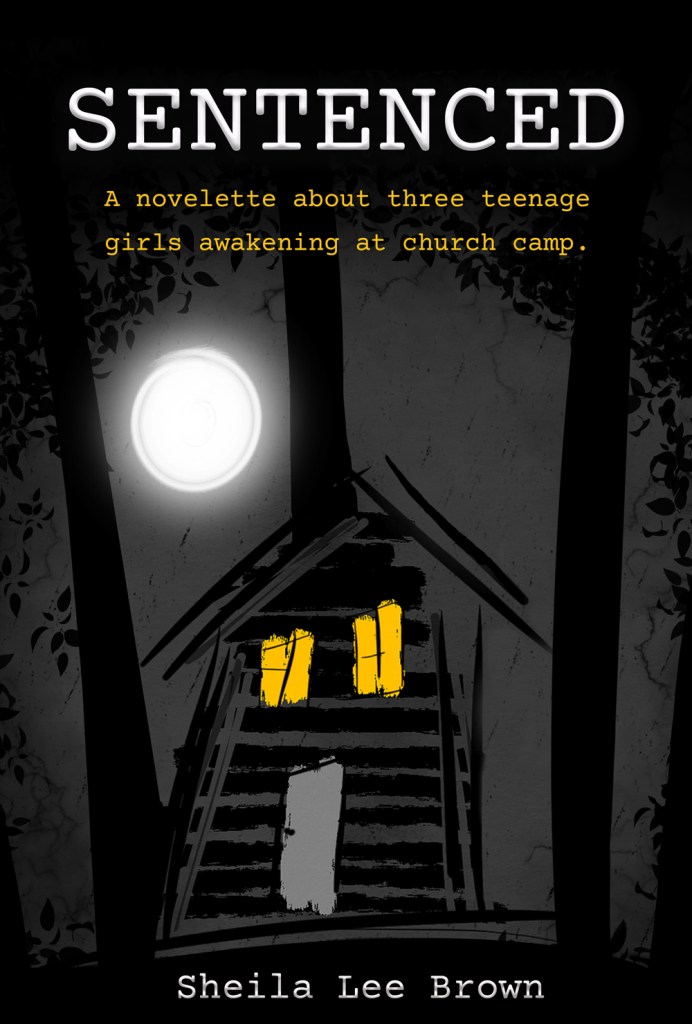
As most writers, I love using writing as a cathartic process. I have been circling this story for many years, giving it the tentative title, “Sentenced”. It felt like more than just a journal entry for me to work through privately. At one time, I wanted to write it as a way of highlighting hypocrisy in order to release my young adult anger self-righteously.
I never could finish it that way. It felt trite. I got stuck and the story didn’t seem to want to go further and I didn’t want to force it to be what I wanted. I knew instinctively that there was more for me to uncover so I would know what the real story needed to be.
Many years of self-reflection later…
I opened the file for “Sentenced” and read it with fresh eyes. I realized that I felt really heavy reading it and that I also didn’t feel the anger or injustice that I once did. No one did anything intentionally hurtful. We were just human beings bumping up against each other in the way that we do. I decided to start revising the story and creating it in a way that was fun for me. From there, the ideas began popping and I was off.
What Sentenced Became
Sentenced is no longer a rant. It’s a surreal, funny, and heartfelt little journey through guilt, expectation, and otherworldly judgment. It’s about what happens when three teen girls find themselves facing cosmic consequences for things they don’t fully understand.
There’s a glow-y celestial visitor. There are mosquito swarms and snack-cakes. And underneath it all? There’s a deeper question about how we measure goodness—and who gets to decide.
What to Read Sentenced?
You can find it on Amazon or in your library’s Overdrive.
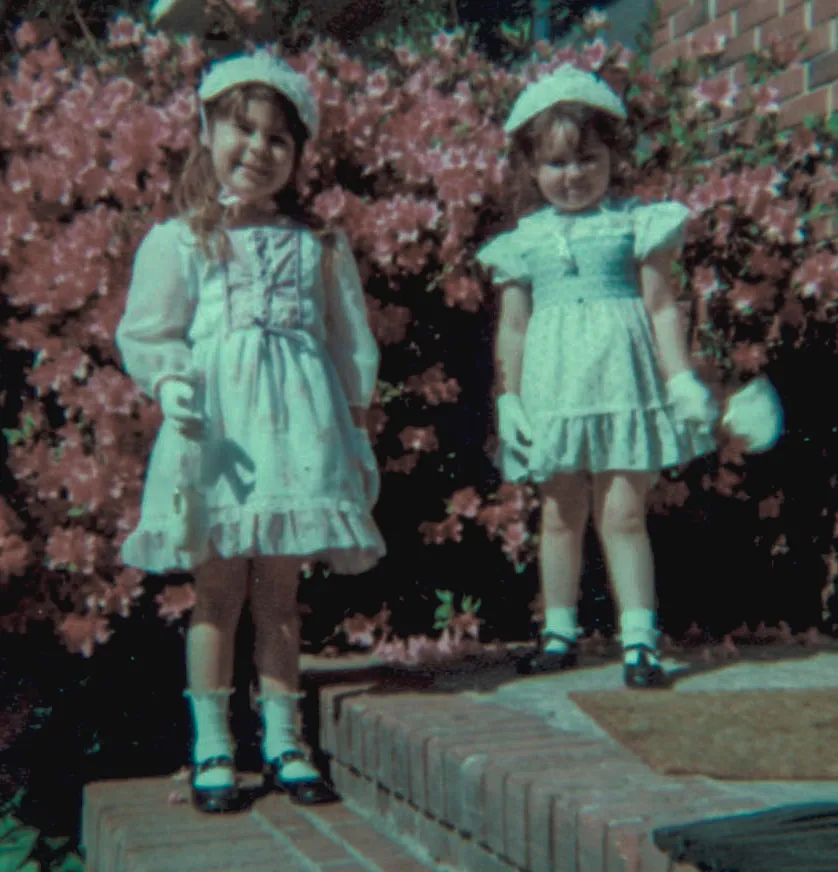
It seems that my mom and grandmother were always dressing my sister Marie and me up in little lacy things. And, okay, I’ll admit that as a young girl I liked the little black shoes and wearing the gloves. I think Marie and I always looked forward to Easter each year and the prospect of a new pair of white gloves.
That said, I am certain this was a picture taken on Easter. Marie and I are standing on the front porch steps of my grandmother’s house (that’s me on the top step). Those gargantuan azalea bushes behind us were the inspiration for my story, The Azaleas.
A Living Wall of Color
The azalea bushes at my grandmother’s house were huge when we were children and they were still pretty large when I moved into my grandmother’s house while I was in college and even later when I lived there from 2002 to 2010.
Keeping them trimmed back during the summer was quite a chore because I liked to keep them at least a foot away from touching the house and just below the front windows. It was a lot of work. They grew fast and furious. One day I was trimming away and the story “The Goophered Grapevine” by Charles Waddell Chestnut popped into my head. It was a great story about a man whose life gets connected to a bewitched grapevine. When the grapes grow lush and healthy in the spring and summer, so does the man. In the winter, he gets shriveled and dry like the grapevine.
Where Story and Roots Intertwine
That seed of an idea took root in my imagination. From there, The Azaleas grew—a tale with its own strange logic and quiet sense of enchantment. I eventually developed the character, the conflict, and the slightly magical twist.
An earlier version of the story was published in Beyond the Clouds, and now it has been included in another collection of short stories.
Want to Read the Story?
The Azaleas is a short, haunting tale of the dark side of family and the invisible threads that bind us to the places we come from.
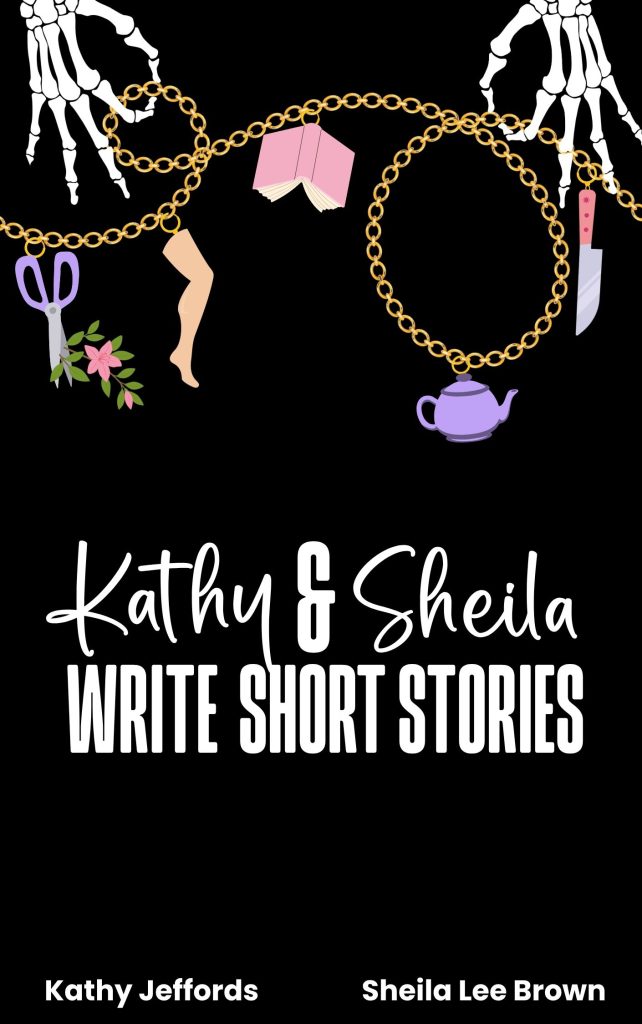
You can get a copy of it as well as four other stories from me and five stories from my friend Kathy in Kathy & Sheila Write Short Stories on Amazon.
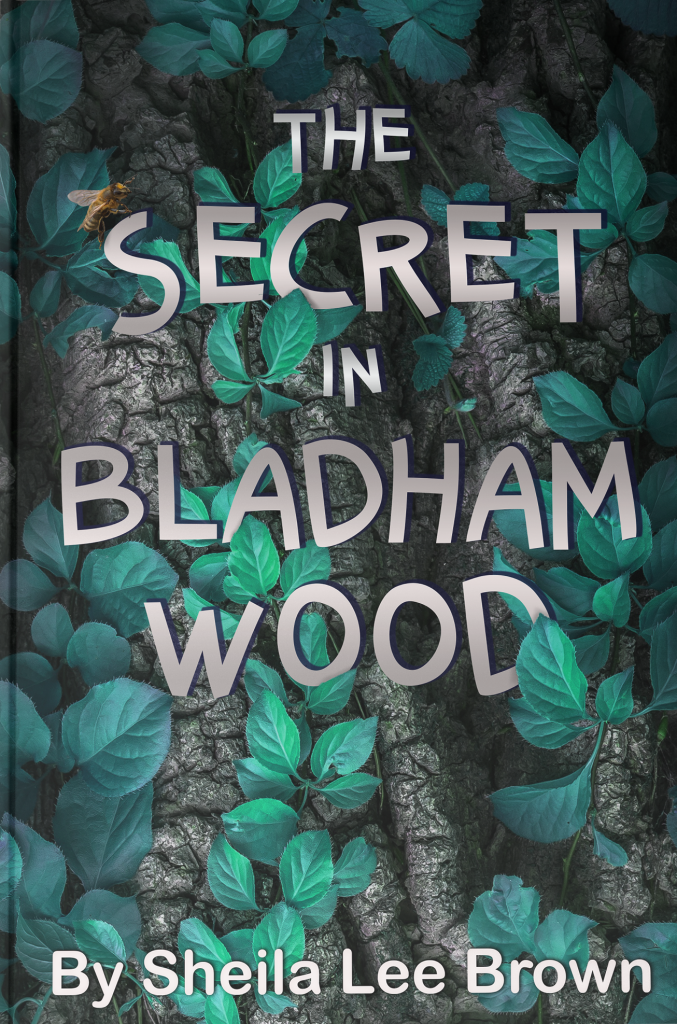
I think the story behind a story is one of the most fascinating parts of being a writer. For The Secret in Bladham Wood, it all began with what I can only describe as a tiny hallucination.
Years ago, when I still lived in South Carolina, I was outside on a hot summer day (that southern gelatinous-air kind of hot) cutting grass with a push mower. I must have been over-heated because as I was demolishing the grassy overgrowth in the front yard, I thought I saw a piece of paper floating by in my peripheral vision.
My first thought was that maybe some trash had gotten into the mower and was blown out with the grass bits, except there was no piece of paper or even any bits of pieces of paper. Nothing floating by anywhere. Just a trick of the eye. However, it got me to thinking. What if….?
Notes, Bees, and Portal-ish Beginnings
The idea of a piece of paper appearing out of thin air was an intriguing one. But to what purpose? I was sure it would have to be some form of communication. The first attempt at using this idea was a story called “The Delia Papers.” In that story, the notes did appear out of nowhere. I never published the story or even completely finished it.
At the same time I was working on “The Delia Papers,” I was also working on another short story where a young girl on the brink of maturity goes for a walk in the woods and comes across a hole in the ground with bees coming out of it. She is offered the opportunity to go into the hole and always live as a child. (as I’m writing this out, it still sounds like a really cool story, but I did not completely finish it, either). Anyway, my fascination with bees from that story got transferred over to “The Delia Papers” which I stopped calling “The Delia Papers” as it evolved into something much bigger.
At its core, The Secret in Bladham Woodis about two sisters. I also wanted to delve into the idea of our inner power and tapping into it. The Secret in Bladham Wood is really an introductory piece to a lot of ideas. The story is so much bigger than what is hinted at in this first book. The next book will elaborate on the residual effects of Sam, Lilly, and Marcus uncovering the secret and what that means for all involved.
However, my personal adventures have crept in over the years. “The School Car” is a fictionalized version of something that happened to me in elementary school. It made quite an impression at the time and has stayed with me over the years.
When I first began writing stories as a middle-grader, I didn’t write much based on my own experiences. Part of the fun and play of creating was how different it could be from my reality.
My first published short story Darker than the Night was published in 2007. It was a creepy little children’s story and I enjoyed writing to that age group and the little awakenings we start having as we get older. As I brainstormed other ideas for fun stories I could write, I kept remembering the old car just off the school property that captured my imagination as a kid.
Playground Dangers and Urban Legends
Pate Elementary had a huge playground. How the teachers managed to monitor us all, I’ll never know. Maybe they didn’t? (We all survived, somehow.)
It had all the classic death-trap-turned-childhood-gold:
The merry-go-round where we gleefully slung each other off, skidding across the asphalt.
The flip-bars where I mastered flipping one-handed, no-handed, and the “penny drop” (where you flipped yourself off and landed on your feet). I received my first noggin’ bump after landing head-first on the ground. I remember my art teacher telling me I looked like a unicorn. 🙂
The metal jungle gym where we hung upside-down and flipped ourselves down to the ground. I slipped once and did a one-handed swing right into one of the metal bars. I became a unicorn again for a while.
The monkey bars that we swung across, but also climbed up on and flipped off-why were we obsessed with flipping off of things!?!
The metal slide that charbroiled your hands and legs if you were wearing shorts.
The seesaw of crushed groins.
I think there were also some pull-up bars, tires embedded into the ground, and maybe some downed wooden poles that we used as a balance beam.
But the best place? That was the hill.
On the left side of the playground, the ground sloped down a hill with lots of tree cover. It was a great place to get out of the hot sun and play hide and seek. It also had an awesome fissure in the hill that was big enough for someone who was “it” to climb in and run back and forth while trying to catch everyone else as they hopped back and forth over the little ditch.
Fun times.
The School Car: Fact, Fiction, and Fear
At the very bottom of the hill was a chain-link fence where the school property ended. Past that was an overgrown yard with an old rusty car sitting in the tall grass. Tales were passed around about the murders that had taken place in it. And while it didn’t happen often, it was a common dare to challenge other kids to run out and tag the car.
I remember being very curious and yet not wanting to get in trouble for leaving school property. “The School Car” is essentially the story of my encounter with the school car. Sometimes you just have to know the truth for yourself.
Want to Read the Story?
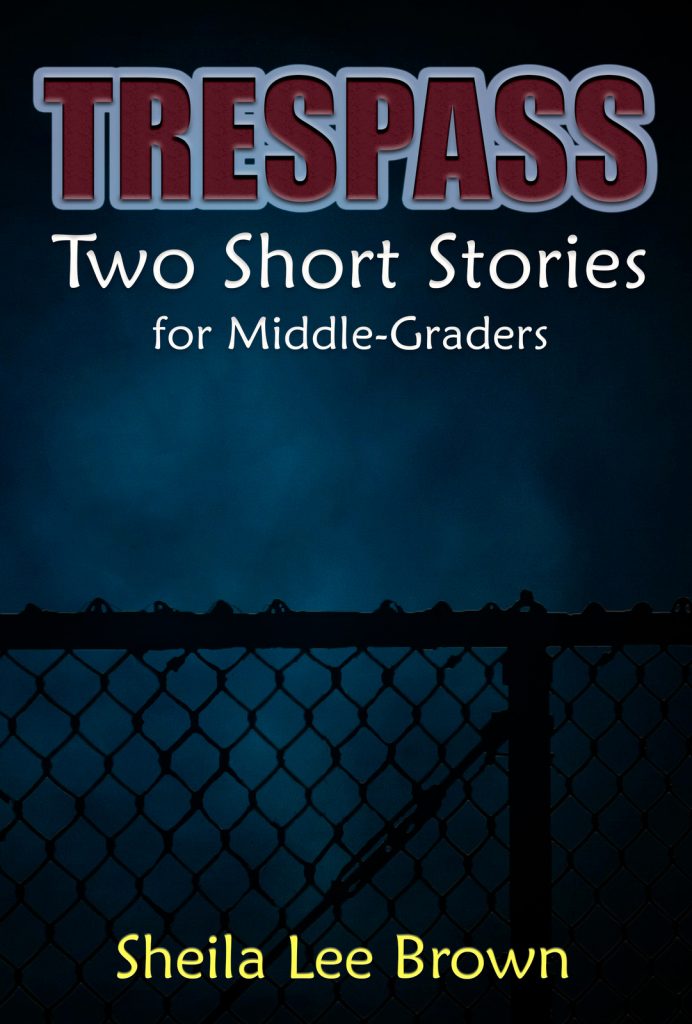
You can get a copy of The School Car as one of the two stories in Trespass: Two Short Stories for Middle-Graders on Amazon. It’s only $0.99 to buy or read for free with Kindle Unlimited!